
Office Hysteroscopy: Advanced Uterine Cavity Evaluation
A gentle, 30-minute in-office visual evaluation of the uterine cavity. Using an ultra-slim 3.9 mm micro-hysteroscope, Dr. Fady Sharara accurately identifies and treats uterine polyps, fibroids, scar tissue, and structural septa before embryo transfer.
Why Choose VCRM?
Ultra-Thin 3.9 mm Scope: Maximum patient comfort without painful cervical dilation.
Accredited ASC On-Site: AAAASF certified since 2006 for sterile surgical standards.
Real-Time HD Video: View the cavity alongside Dr. Sharara during the exam.
1,000+ Successful Procedures: Zero infection rate in over a thousand cases.
Book Evaluation (571) 443-8322Direct Examination of the Uterine Cavity
The uterine cavity is the biological cradle where an embryo must attach, implant, and receive nourishing blood supply throughout gestation. Any structural or endometrial distortion inside the uterine walls can significantly impair implantation rates, elevate miscarriage risks, or lead to repeated IVF failure.
An office hysteroscopy is an advanced diagnostic evaluation that allows your reproductive specialist to directly visualize the interior of your uterus in high definition. At the Virginia Center for Reproductive Medicine (VCRM), all hysteroscopic procedures are performed on-site in our dedicated Ambulatory Surgery Center (ASC), which has been proudly accredited by the American Association for Accreditation of Ambulatory Surgery Facilities (AAAASF) since 2006.
The Advantage of In-Office Evaluation
Unlike hospital operating room hysteroscopies that require general anesthesia, lengthy recovery times, and heavy facility fees, VCRM's in-office hysteroscopy provides immediate diagnostic answers in a relaxed, comfortable clinical setting with minimal recovery time.
Conditions Identified & Evaluated
By instilling a gentle flow of sterile saline solution to gently distend the uterine cavity, Dr. Sharara can inspect the entire endometrial lining, the tubal ostia (where the fallopian tubes connect), and the endocervical canal to diagnose:
Intrauterine Adhesions (Asherman's)
Bands of scar tissue resulting from past D&C procedures, infections, or uterine surgeries that tether the uterine walls together and restrict endometrial growth.
Endometrial Polyps
Benign mucosal overgrowths projecting into the cavity that act like an intrauterine device (IUD), triggering localized inflammation that disrupts embryo attachment.
Submucosal Fibroids (Myomas)
Muscular uterine tumors that impinge upon or protrude directly into the cavity, distorting its natural contour and compromising localized blood flow.
Uterine Septum & Anomalies
Congenital fibrous partitions dividing the cavity. Because septa have poor vascularity, embryos implanting on them frequently result in early miscarriage.
Visualizing Uterine Health: Normal vs. Asherman’s Syndrome
High-definition digital imaging allows immediate differentiation between a pristine, receptive endometrial cavity and pathological scar tissue:
Intrauterine Adhesions (Asherman's Syndrome)
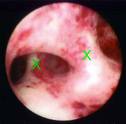
Dense fibrotic adhesion bands bridging the uterine walls, occluding the cavity and preventing healthy endometrial proliferation.
Normal, Healthy Uterine Cavity
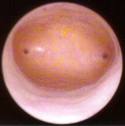
A smooth, symmetric, unobstructed uterine cavity with healthy, pink endometrial lining and clearly visible bilateral tubal ostia.
What to Expect During the Office Hysteroscopy
An office hysteroscopy at VCRM typically takes approximately 15 to 30 minutes from start to finish. We prioritize patient comfort and emotional ease at every stage of the evaluation:
Preparation & Local Anesthetic
A standard speculum is placed gently (similar to a routine Pap smear). A local anesthetic spray or gentle paracervical block is administered to numb the cervix.
Ultra-Slim 3.9 mm Scope Placement
We utilize the latest 3.9 mm micro-hysteroscope. Because the instrument is exceptionally slender, mechanical dilation of the cervix is rarely needed, dramatically reducing patient discomfort compared to older 5 mm systems.
Sterile Saline Infusion & HD Video
Warmed sterile salt water gently opens the walls of the uterus. An integrated high-definition video monitor allows both you and Dr. Sharara to view your uterine lining in real-time together.
Immediate Review & Rapid Recovery
The scope is gently withdrawn. Dr. Sharara reviews the findings with you immediately, answers all questions, and outlines any necessary next steps.
Frequently Asked Questions
Most women describe feeling mild, temporary menstrual-like cramping, especially as the sterile saline is infused. Women with tubal blockages may experience slightly more cramping. Because we utilize the ultra-thin 3.9 mm micro-hysteroscope, discomfort is greatly minimized. We recommend taking 2–3 pills of ibuprofen (Motrin or Aleve, 400–600 mg) one hour before the procedure to reduce or prevent cramping.
Yes. Most patients experience minimal to no lingering discomfort after the test. Because no general anesthesia or sedatives are used for standard diagnostic hysteroscopy, you can safely drive yourself home and resume your workday immediately afterward.
Potential risks are very minor and include temporary cramping, light vaginal spotting for 2 to 3 days, and a remote risk of infection. In our accredited surgery facility, Dr. Sharara has performed over 1,000 office hysteroscopy cases with zero infections or major complications to date.
Call our office on the first day of full menstrual flow to schedule. The procedure is timed between Days 6 and 12 of your cycle—after menstrual bleeding has finished but before ovulation occurs. Patients should use barrier protection during intercourse prior to the test. Unprotected intercourse may resume 24 hours after the procedure if no operative resection was required.
Optimize Your Uterine Cavity for Success
Ensure your uterine cavity is free of polyps, fibroids, or scar tissue before your next fertility treatment cycle. Schedule an evaluation with Dr. Fady Sharara today.
Begin Your Fertility Journey with VCRM
Experience industry-leading success rates and individualized reproductive medicine tailored to your needs.